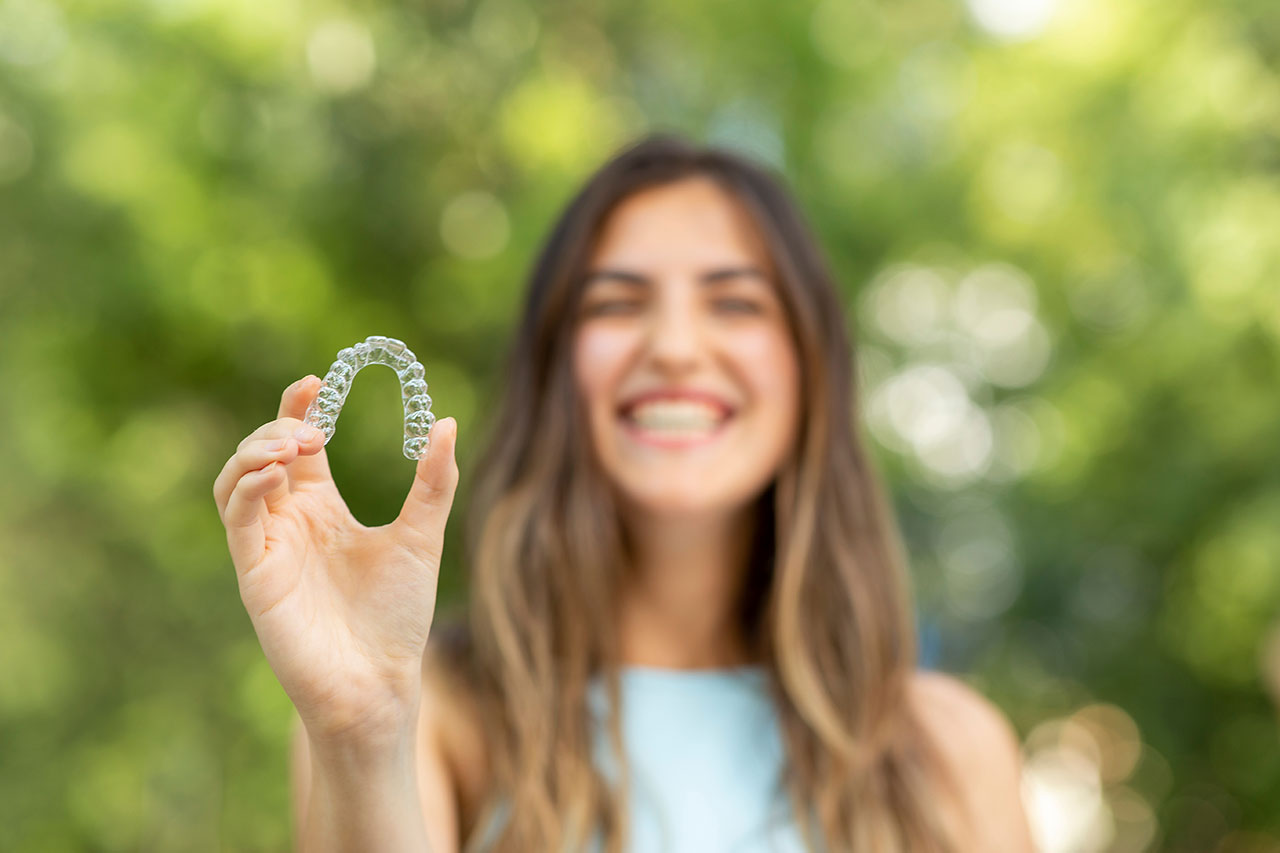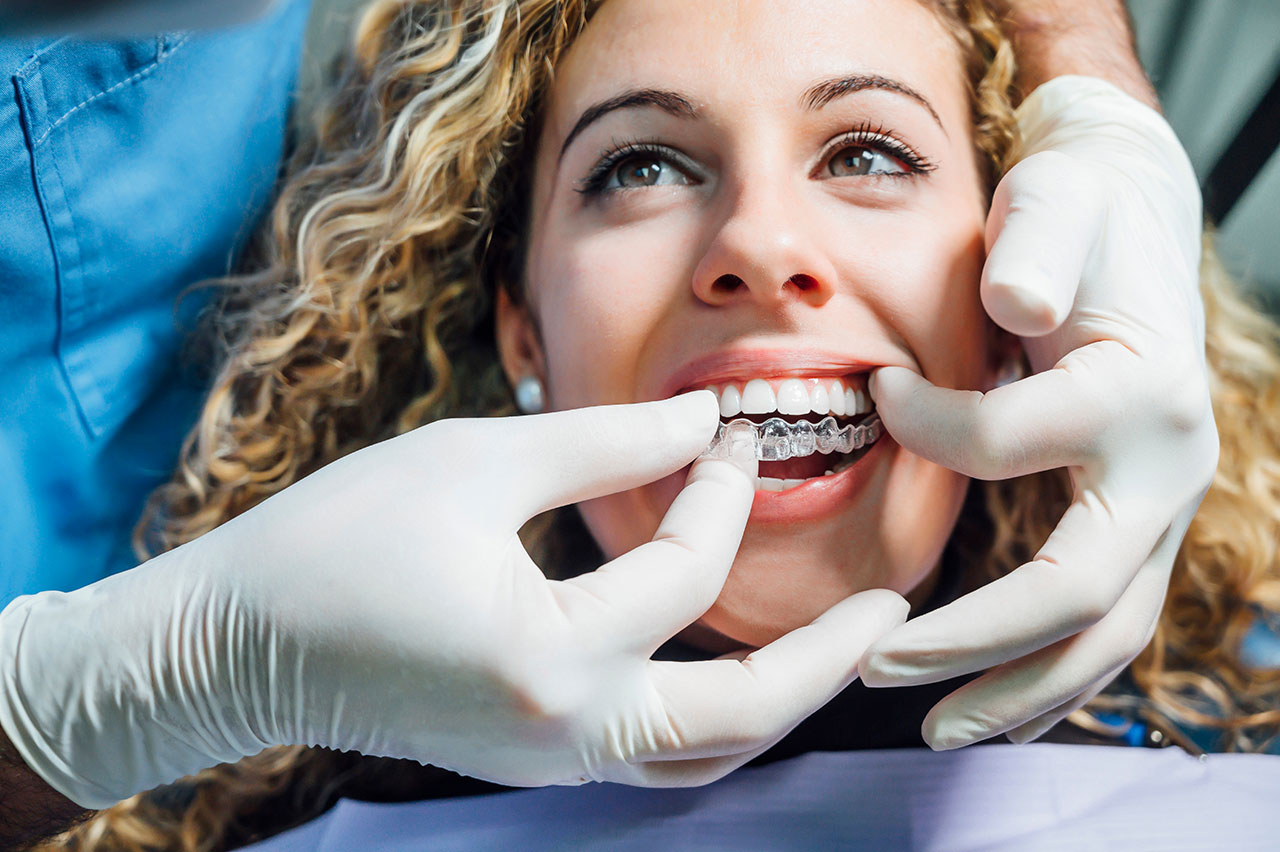
What if straightening your teeth felt like upgrading your daily routine—not upending it? That’s the…

Invisalign in Coral Springs: Straighter Teeth Without Hitting Pause on Your Life
What if you could straighten your teeth while still eating your favorite foods and smiling for photos without brackets and wires? Invisalign makes that everyday reality. Using a series of clear, removable trays, Invisalign guides teeth into better positions—quietly and steadily—so your bite works better and your smile looks the way you want.
How Invisalign Works (Plain and Simple)
Invisalign starts with digital scans and a plan that charts your teeth from today’s position to the finished result. You’ll receive a set of custom trays (aligners). Each aligner makes a tiny, controlled change. Wear it 20–22 hours a day, switch to the next one on schedule, and your teeth follow the plan. Small tooth-colored “attachments” may be placed to help the trays grip and move specific teeth; they’re subtle and temporary.
Because Invisalign is removable, you’ll take the aligners out to eat, brush, and floss—no banned foods, no complicated cleaning.
Who’s a Good Candidate?
Many bites can be treated with Invisalign: crowding, spacing, some overbites and crossbites, and relapses after old braces. Great candidates are consistent—wearing aligners as directed and keeping up with brief check-ins. Some complex jaw or bite problems still do best with braces or combined approaches. We’ll be honest about what Invisalign can (and can’t) deliver for your goals.
What a Typical Invisalign Timeline Looks Like
-
Planning: We scan, take photos, and map the tooth movements. You’ll preview the projected finish.
-
First trays: You’ll feel gentle pressure for a day or two with each new set—that’s movement at work.
-
Switch schedule: Most people change aligners every 1–2 weeks.
-
Check-ins: Quick visits keep things on track; some steps can be monitored virtually.
-
Refinements: Small “extra” sets are common at the end to polish minor details.
-
Retainers: After Invisalign, retainers hold the result. They’re clear and low-effort—nighttime wear keeps your teeth honest.
Total time varies—from a few months for simple alignment to a year or more for complex crowding. The plan is tailored to you.
Day-to-Day Life With Invisalign
You’ll talk normally after a short adjustment period. Eat what you like—just remove the trays first. Brush after meals, rinse the trays, and pop them back in. Clean aligners with a soft brush and lukewarm water (no hot water). A small case keeps them safe in your bag or pocket; aligners in napkins tend to get tossed (we’ve seen it!).
If you travel, take extra sets and a copy of your plan. Invisalign is road-trip friendly.
How Invisalign Compares to Braces (In Words, Not a Table)
Both move teeth using steady, gentle forces. Invisalign is nearly invisible and removable, which makes eating and cleaning easier. Braces are fixed and don’t depend on wear-time, which can help with complex movements. For many adults and teens who value discretion and convenience, Invisalign fits life with fewer detours.
Comfort and Speech
Most people describe Invisalign as pressure, not pain. Edges are smooth and adapt quickly to cheeks and lips. A tiny lisp can appear for the first day or two and then fades as your tongue learns the new landscape. Orthodontic wax and an emery board can smooth any rough spot if needed.
Keeping Teeth Healthy During Treatment
This is a big plus: Invisalign makes hygiene simple. Since trays come out, you can brush and floss like normal. That helps prevent decalcified “white spots” and gum irritation sometimes seen around brackets. Stick with fluoride toothpaste, floss nightly, and use a mouth rinse if your gums feel puffy.
Costs, Insurance, and Value
Pricing depends on case complexity and number of aligners. Many dental plans include orthodontic benefits that apply to Invisalign. We’ll outline costs clearly and discuss payment options. Consider the value: straighter teeth are easier to clean, which can mean fewer cavities and calmer gums over the long haul.
Common Questions
-
How many hours a day? Aim for 20–22. Less time means slower or less accurate movement.
-
Can I chew gum? Not with aligners in—remove them first, then brush and reinsert.
-
Coffee or tea? Hot drinks can warp trays and stain them. Drink with aligners out, then rinse and reinsert.
-
Sports? Invisalign can act as a basic mouthguard, but a dedicated guard is better for contact sports.
Benefits of Invisalign (Supported by Professional Sources)
-
Discreet and removable: Clear aligners provide aesthetic and lifestyle advantages over fixed braces for many cases (American Association of Orthodontists—AAO).
-
Oral hygiene advantage: Removable trays allow easier brushing and flossing, helping reduce plaque buildup and gingival inflammation compared with fixed appliances in some studies (orthodontic literature and reviews).
-
Predictable planning: Digital treatment planning helps visualize movements and outcomes, improving communication and case organization (AAO and aligner therapy guidance).
Sources: AAO patient education; peer-reviewed summaries on clear aligner therapy.
Bringing It All Together
Invisalign straightens teeth while you keep living your life—no metal, no food list, no fuss. With consistent wear and a clear plan, you’ll see steady progress week by week. When you reach the finish line, retainers preserve your result so your smile stays put.
Want to see a personalized Invisalign preview and timeline? Call Pine Ridge Dental on Wiles at (954) 906-3337 or visit 9132 Wiles Rd, Coral Springs, FL 33065 to schedule a consultation and map out your path to a straighter smile.

Related Posts